
If you’ve ever ended your day with a dull ache in your lower back or woken up with stiffness between your shoulder blades, you’re not alone. Back pain is one of the most common reasons people seek healthcare, and here in Destin, FL, we see patients every week who are struggling with discomfort that impacts their work, recreation, and quality of life. What many don’t realize is that the way they sit, stand, and move throughout the day plays a significant role in both causing and relieving that pain. Poor posture isn’t just about looking slouched—it creates real biomechanical stress on your spine, muscles, and nerves. The good news? Understanding the connection between posture and back pain, and making targeted improvements with chiropractic care, can help you find lasting relief and prevent future problems.
What is the relationship between posture and back pain? Posture refers to the alignment of your body when sitting, standing, or moving. When posture is balanced and neutral, your spine maintains its natural curves and distributes weight evenly. Poor posture disrupts this balance, placing excessive strain on muscles, ligaments, and spinal joints, which can lead to pain, stiffness, and injury over time.
Table of Contents
- Why Posture Matters for Your Spine
- Common Posture Problems That Contribute to Back Pain
- Understanding the Biomechanics: How Poor Posture Creates Pain
- The Role of Chiropractic Care in Posture Correction and Pain Relief
- Practical Tips for Improving Your Posture Daily
- When to See a Chiropractor for Posture-Related Back Pain
- Posture Mistakes vs. Corrections
- Myths vs. Facts About Posture and Back Pain
- Final Thoughts from Douglass Chiropractic
Why Posture Matters for Your Spine
Your spine is designed with three natural curves: a gentle inward curve in your neck (cervical lordosis), an outward curve in your mid-back (thoracic kyphosis), and another inward curve in your lower back (lumbar lordosis). These curves work together like springs to absorb shock, distribute your body weight, and allow efficient movement. When you maintain good posture, these curves stay balanced, and the muscles surrounding your spine can work as they’re designed to—supporting you without excessive strain.
However, when posture becomes compromised, everything changes. Slouching forward flattens the natural lumbar curve. Sitting with rounded shoulders exaggerates the thoracic curve. Craning your neck forward to look at a screen shifts your head’s center of gravity. Each of these deviations places uneven pressure on spinal joints, causes muscles to work harder than necessary, and can compress nerves. Over weeks, months, and years, this chronic stress leads to muscle imbalances, joint dysfunction, disc problems, and persistent pain.
Research from the National Institutes of Health suggests that posture-related biomechanical stress is a significant contributing factor in chronic back pain, particularly in populations with sedentary lifestyles. Here in Destin, where many residents work desk jobs or spend long hours on computers, posture-related back pain is something we address regularly at Douglass Chiropractic.
Common Posture Problems That Contribute to Back Pain
Let’s look at the most common postural deviations that lead to back pain. Recognizing these patterns is the first step toward making meaningful changes.
Forward Head Posture
Forward head posture occurs when your head juts forward, ahead of your shoulders. For every inch your head moves forward, it effectively adds ten pounds of pressure on your neck and upper back. This posture is extremely common among people who spend hours looking at phones, tablets, or computer monitors. It strains the muscles at the base of the skull, creates tension headaches, and contributes to upper back and neck pain that can radiate downward.
Rounded Shoulders and Upper Crossed Syndrome
Rounded shoulders happen when the chest muscles tighten and the upper back muscles weaken, pulling your shoulders forward. This creates what chiropractors call “upper crossed syndrome,” a pattern of muscle imbalance that affects posture throughout your entire spine. It contributes to mid-back pain, shoulder discomfort, and can even affect breathing mechanics.
Anterior Pelvic Tilt and Lower Crossed Syndrome
An anterior pelvic tilt occurs when your pelvis tilts forward, exaggerating the arch in your lower back. This often results from tight hip flexors (from prolonged sitting) and weak abdominal and gluteal muscles. The exaggerated lumbar curve places excessive stress on the lower back joints and discs, leading to chronic lower back pain. This condition, sometimes called “lower crossed syndrome,” is especially common in people with sedentary jobs or those who sit for extended periods.
Slouched Sitting Posture
Slouching while sitting flattens the natural lumbar curve and rounds the thoracic spine. This position increases pressure on the intervertebral discs, strains the ligaments supporting your spine, and forces muscles to work overtime to keep you upright. Over time, this contributes to disc degeneration, muscle fatigue, and chronic lower back pain.
Understanding the Biomechanics: How Poor Posture Creates Pain
To understand why posture matters so much, it helps to look at the biomechanics—the way forces affect your body’s structure and movement. Your spine isn’t just a stack of bones; it’s a complex system of vertebrae, discs, ligaments, muscles, and nerves all working together.
When your posture is aligned, your muscles and ligaments maintain your position with minimal effort. Your body weight is distributed evenly across the vertebrae and discs. But when posture shifts out of alignment, certain muscles must contract harder and longer to compensate. These muscles become tight, fatigued, and painful. Meanwhile, opposing muscles weaken from underuse, creating imbalances.
Poor posture also changes how force is distributed across your spinal joints. Instead of even pressure across the disc, you get uneven loading. One side of the disc may bear more weight, which over time can lead to bulging or herniation. Misaligned spinal joints (what chiropractors call subluxations) can irritate nearby nerves, causing pain that radiates into the arms, legs, or other areas.
The nervous system plays a critical role here too. Your spine protects your spinal cord and nerve roots. When posture-related stress causes joint dysfunction or muscle tension, it can interfere with normal nerve function. This doesn’t just cause pain—it can affect movement, sensation, and even the function of organs supplied by those nerves. Chiropractic care focuses on restoring proper alignment and movement to reduce this nerve interference and support your body’s natural healing abilities.
The Role of Chiropractic Care in Posture Correction and Pain Relief
Chiropractic care offers a non-surgical, drug-free approach to addressing both posture problems and the back pain they cause. At Douglass Chiropractic in Destin, we focus on identifying the root causes of your pain, which often includes postural deviations and the spinal dysfunction they create.
Comprehensive Postural Assessment
Your care begins with a thorough evaluation. We assess your posture in standing, sitting, and movement. We look at the alignment of your head, shoulders, spine, and pelvis. We check for muscle imbalances, range of motion limitations, and areas of spinal dysfunction. This helps us understand not just where you hurt, but why.
Spinal Adjustments to Restore Alignment
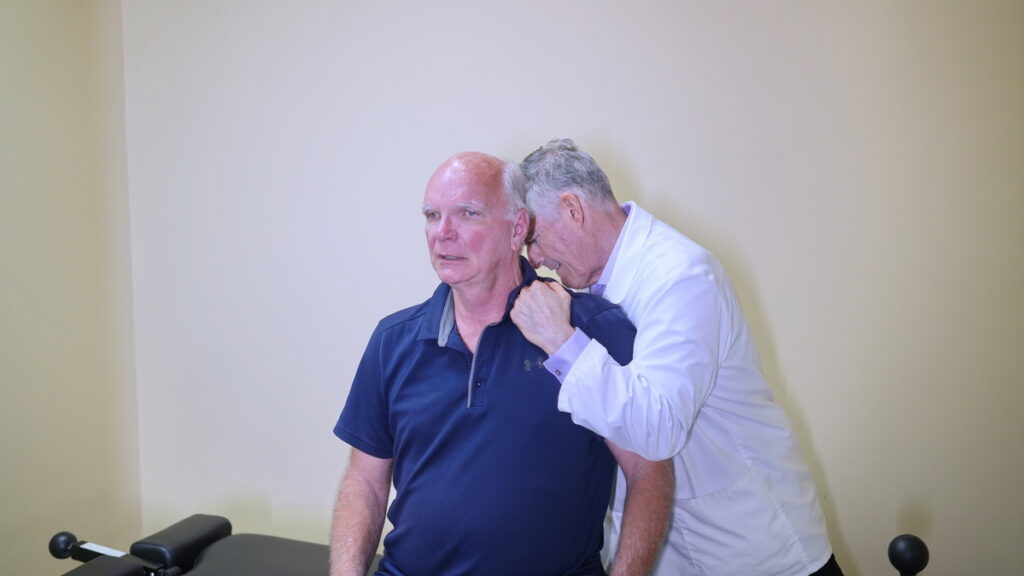
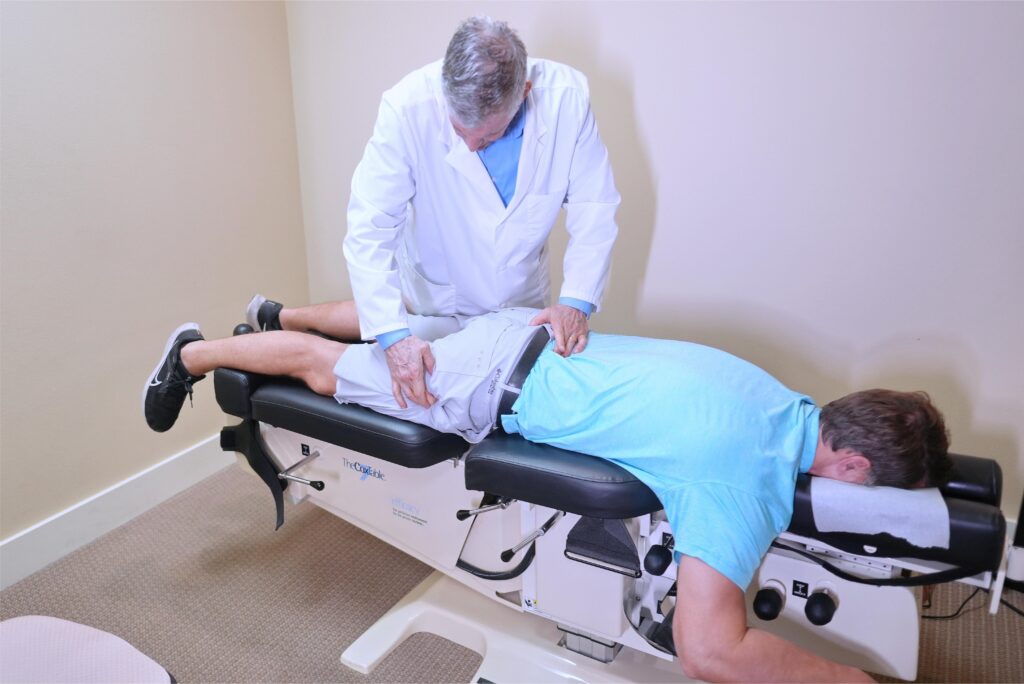
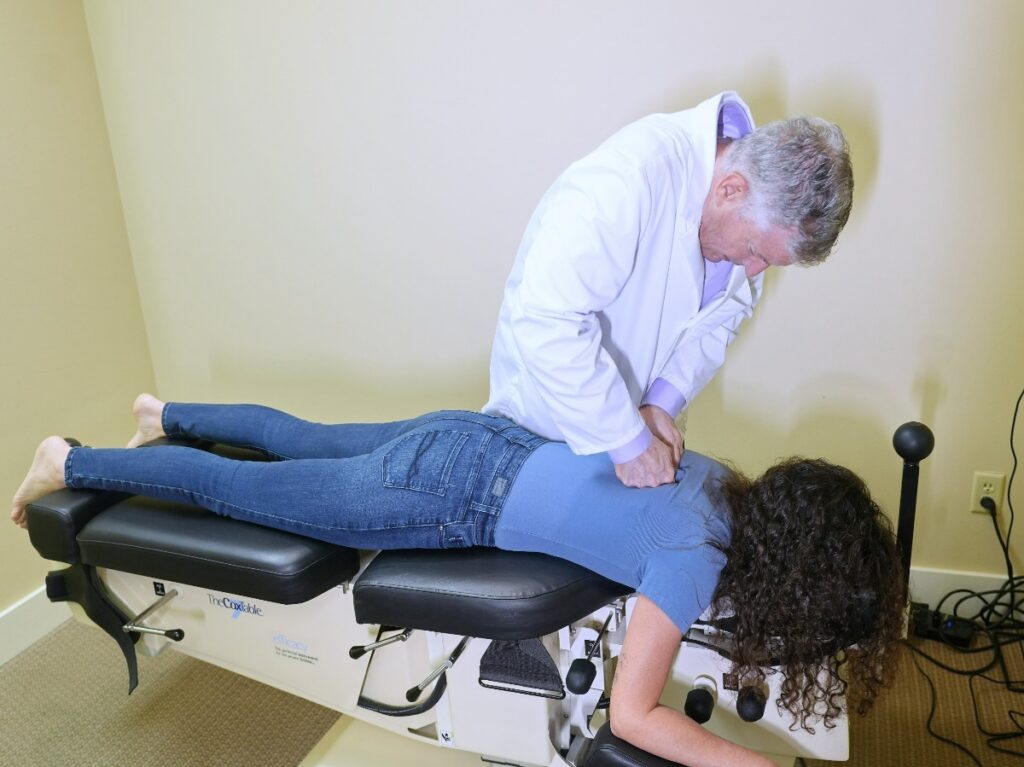
Chiropractic adjustments are precise, controlled movements applied to spinal joints that aren’t moving properly. When posture problems cause certain vertebrae to become restricted or misaligned, adjustments help restore normal motion and alignment. This reduces nerve irritation, decreases muscle tension, and allows your body to function more efficiently. Evidence from systematic reviews, including those published in the Cochrane Library, indicates that spinal manipulation can be effective for certain types of back pain, particularly when combined with other conservative care approaches.
Soft Tissue Work and Muscle Release
Because posture problems create muscle imbalances, we often incorporate soft tissue techniques to address tight, overworked muscles. This might include myofascial release, trigger point therapy, or instrument-assisted techniques. Releasing tension in tight muscles allows your body to move more freely and makes it easier to maintain better posture.
Corrective Exercises and Strengthening
Long-term posture improvement requires strengthening weak muscles and stretching tight ones. We provide individualized exercise programs designed to correct your specific imbalances. This might include exercises to strengthen your core, upper back, and glutes, along with stretches for tight hip flexors, chest muscles, and hamstrings. These exercises help reinforce the changes made through adjustments and support lasting improvement.
Ergonomic Guidance and Lifestyle Modifications
We also provide practical advice on how to set up your workspace, choose supportive furniture, and modify daily habits to support better posture. Small changes—like adjusting your monitor height, using a lumbar support cushion, or taking regular movement breaks—can make a significant difference in reducing postural stress throughout the day.
Practical Tips for Improving Your Posture Daily
While professional chiropractic care is important, there’s a lot you can do on your own to support better posture and reduce back pain. Here are some practical, evidence-based strategies you can start today.
Optimize Your Workspace Ergonomics
If you work at a desk, your workstation setup has a huge impact on your posture. Position your monitor so the top of the screen is at or slightly below eye level, about an arm’s length away. Your keyboard and mouse should be at elbow height, allowing your shoulders to relax. Use a chair with good lumbar support, or add a small cushion or rolled towel at the small of your back. Keep your feet flat on the floor or on a footrest.
Practice the 20-20-20 Rule
Prolonged static posture is problematic even when your setup is perfect. Set a timer to remind yourself every 20 minutes to take a 20-second break and look at something 20 feet away. Stand up, stretch, and move around. This breaks up long periods of sitting and gives your muscles a chance to reset.
Strengthen Your Core
A strong core provides the foundation for good posture. Your core includes not just your abdominal muscles, but also your back muscles, pelvic floor, and diaphragm. Simple exercises like planks, bird dogs, and dead bugs can help build core stability without requiring a gym membership or special equipment.
Stretch Tight Muscles Regularly
Identify which muscles tend to get tight based on your daily activities. If you sit a lot, your hip flexors and chest muscles likely need stretching. If you stand all day, your calves and lower back might be tight. Gentle, consistent stretching—holding each stretch for 20-30 seconds—can help maintain muscle length and flexibility.
Be Mindful of Your Phone and Tablet Use
Looking down at your phone for hours each day takes a toll on your neck and upper back. Try to bring your device up to eye level rather than dropping your head down. Take breaks from screen time, and consider limiting recreational scrolling to reduce cumulative strain.
Sleep in a Supportive Position
Your posture matters even when you’re sleeping. Avoid sleeping on your stomach, which twists your neck and flattens your lumbar curve. Side sleeping with a pillow between your knees or back sleeping with a pillow under your knees helps maintain spinal alignment. Use a pillow that supports your neck’s natural curve without pushing your head too far forward or letting it drop back.
When to See a Chiropractor for Posture-Related Back Pain
How do you know when it’s time to seek professional help? While occasional muscle soreness after a long day is normal, certain signs suggest you would benefit from chiropractic evaluation and care.
Consider scheduling an appointment at Douglass Chiropractic if you experience persistent pain that lasts more than a few days, even with rest and home care. If your back pain is getting progressively worse, interfering with daily activities like work, exercise, or sleep, that’s another important sign. Postural pain that radiates into your arms, legs, or causes numbness or tingling may indicate nerve involvement and warrants professional assessment.
If you notice that your posture has visibly changed—perhaps friends or family have commented that you’re slouching more, or you see it yourself in photos—that’s a good time to have your spine evaluated. Sometimes postural changes develop gradually, and an outside perspective helps you recognize what’s happening.
You should also seek care if you’ve tried improving your posture on your own but aren’t seeing results, or if pain returns quickly after you stop paying attention to your positioning. This often indicates underlying spinal dysfunction or muscle imbalances that need professional attention.
While chiropractic care is safe and effective for most people, certain symptoms require immediate medical attention. Seek emergency care if you experience sudden, severe back pain following trauma, loss of bladder or bowel control, progressive weakness in your legs, or pain accompanied by fever, unexplained weight loss, or a history of cancer. These red flags may indicate serious conditions that need medical evaluation right away.
Posture Mistakes vs. Corrections
| Common Posture Mistake | Why It Causes Problems | Corrective Strategy |
|---|---|---|
| Head jutting forward while working | Adds 10+ pounds of pressure per inch forward, straining neck and upper back muscles | Position monitor at eye level; practice chin tucks to retrain neck alignment |
| Slouching in chair with rounded lower back | Flattens lumbar curve, increases disc pressure, strains ligaments | Use lumbar support cushion; sit with hips slightly higher than knees; maintain natural arch |
| Shoulders rolled forward and chest collapsed | Creates upper crossed syndrome, weakens upper back, restricts breathing | Strengthen upper back with rows; stretch chest muscles; practice shoulder blade squeezes |
| Excessive lower back arch (anterior pelvic tilt) | Compresses lower back joints, strains muscles, creates lower crossed syndrome | Strengthen core and glutes; stretch hip flexors; practice pelvic tilts |
| Standing with weight shifted to one leg | Creates uneven loading on spine and pelvis, leads to muscle imbalances | Distribute weight evenly on both feet; engage core; switch positions regularly |
| Looking down at phone for extended periods | Creates “text neck” syndrome with chronic forward head posture | Bring device to eye level; limit phone time; take frequent breaks |
Myths vs. Facts About Posture and Back Pain
There’s a lot of conflicting information about posture and back pain. Let’s clear up some common misconceptions with evidence-based facts.
Myth: There’s One “Perfect” Posture You Should Hold All Day
Fact: No single static posture is ideal for long periods. The best posture is actually your next posture—meaning regular movement and position changes are more important than holding any one “perfect” position. Your body is designed for varied movement, not static holding.
Myth: Good Posture Means Sitting Up Perfectly Straight with a Rigid Spine
Fact: Good posture maintains your spine’s natural curves, not a perfectly straight line. Your spine should have gentle curves that act as shock absorbers. Trying to sit “too straight” can actually create tension and discomfort. Natural, balanced alignment with relaxed muscles is the goal.
Myth: Posture Only Matters When You’re Sitting
Fact: Your posture during all activities matters—sitting, standing, walking, lifting, and even sleeping. Poor alignment during any of these activities can contribute to pain and dysfunction. How you move through your day cumulatively affects your spinal health.
Myth: If You Have Bad Posture, It’s Too Late to Fix It
Fact: Postural improvements are possible at any age with consistent effort and professional guidance. While long-standing patterns take time to change, your nervous system can learn new movement patterns, and your muscles can adapt to better positioning. Chiropractic care combined with corrective exercises can create meaningful, lasting change.
Myth: Back Pain from Poor Posture Will Go Away on Its Own
Fact: While some postural strain may improve with rest, chronic poor posture creates progressive changes in your spine and muscles that typically worsen without intervention. Addressing posture problems early prevents more serious issues from developing down the road.
Final Thoughts from Douglass Chiropractic
Your posture is more than just how you look—it’s a window into how your spine and nervous system are functioning. The connection between posture and back pain is real, significant, and something you have the power to influence through awareness, daily habits, and professional care when needed. Here in Destin, we understand that our patients lead active lives, whether that means long days at the office, time on the water, or keeping up with family activities. Your spine supports everything you do, and taking care of it through better posture and chiropractic care helps you stay active and pain-free.
At Douglass Chiropractic, we’re committed to helping our Destin community understand the root causes of their pain and providing individualized, conservative care that addresses those causes rather than just masking symptoms. If you’re dealing with back pain, struggling with posture problems, or simply want to take a proactive approach to your spinal health, we’re here to help. Good posture isn’t about perfection—it’s about balance, awareness, and supporting your body’s natural design so you can feel your best every day.
Frequently Asked Questions
Can chiropractic adjustments permanently fix my posture?
Chiropractic adjustments restore proper movement and alignment to your spine, which is an important part of improving posture. However, lasting change requires addressing muscle imbalances and daily habits as well. We combine adjustments with corrective exercises and ergonomic guidance to support long-term postural improvement.
How long does it take to see improvement in posture-related back pain?
Many patients notice some relief within the first few visits, but meaningful, lasting change typically takes several weeks to months depending on how long the problem has existed and how consistently you follow recommendations. Chronic postural issues that developed over years require patience and commitment to correct.
Will strengthening my core really help my back pain?
Research indicates that core strengthening can be beneficial for certain types of back pain, particularly when combined with other conservative care approaches. A strong, stable core provides better support for your spine and reduces strain on passive structures like ligaments and discs during daily activities.
Is it normal for correct posture to feel uncomfortable at first?
Yes, if you’ve spent years in poor postural positions, your muscles have adapted to that alignment. Correct posture may feel strange or even tiring initially because you’re using muscles that have been weak and stretching tissues that have been tight. With consistency, proper alignment will become more natural and comfortable.
Do standing desks prevent back pain better than sitting?
Standing desks can be helpful, but they’re not a complete solution. Prolonged standing creates its own set of postural stresses. The best approach is variety—alternating between sitting and standing, taking movement breaks, and maintaining good alignment in whatever position you’re in.
Can poor posture cause problems beyond back pain?
Yes, chronic poor posture can contribute to headaches, neck pain, shoulder pain, reduced lung capacity, digestive issues, and even increased stress levels. Your posture affects your entire musculoskeletal system and can influence how efficiently your body functions overall.
TL;DR – Key Takeaways
- Poor posture creates biomechanical stress on your spine, muscles, and nerves, contributing significantly to back pain. Maintaining your spine’s natural curves through balanced alignment reduces this strain and supports pain-free function.
- Common postural problems like forward head posture, rounded shoulders, and anterior pelvic tilt create specific patterns of muscle imbalance and joint dysfunction that lead to chronic pain if not addressed.
- Chiropractic care at Douglass Chiropractic in Destin addresses posture-related back pain through spinal adjustments, soft tissue work, corrective exercises, and ergonomic guidance—offering a comprehensive, drug-free approach to lasting relief.
- Simple daily strategies like optimizing your workspace, taking regular movement breaks, strengthening your core, and being mindful of phone use can significantly improve your posture and reduce pain over time.
- Lasting postural improvement requires consistency and often professional guidance, but meaningful change is possible at any age when you address the root causes and commit to better habits and supportive care.