


You were fine yesterday — or at least, you thought you were. Then you stood up from your chair, walked down the stairs, or stepped off the curb, and suddenly your knee announced itself in a way it never has before. Sudden knee pain can be startling, frustrating, and honestly a little scary. Here in Destin, we see this exact situation all the time at Douglass Chiropractic — active adults and families along the Emerald Coast who are caught off guard by knee discomfort that seemed to come out of nowhere. The good news? In many cases, sudden knee pain has an identifiable cause, and understanding what’s driving it is the first step toward doing something about it.
What does it mean when your knee hurts all of a sudden?
Sudden knee pain refers to discomfort, stiffness, or sharp pain in the knee joint that appears without an obvious traumatic injury like a fall or collision. It can stem from overuse, joint inflammation, biomechanical imbalances, or structural problems that were quietly building for some time before they finally made themselves known.
1. Patellofemoral Pain Syndrome (Runner’s Knee)
Patellofemoral pain syndrome — often called runner’s knee — is one of the most common sources of sudden or worsening knee pain in active adults. It occurs when the kneecap (patella) doesn’t track smoothly in its groove at the front of the knee. The cartilage underneath the kneecap can become irritated, leading to a dull, aching pain around or behind the kneecap that worsens with stairs, squatting, or sitting for long periods.
Despite its nickname, you don’t have to be a runner to develop this condition. Walking, cycling, hiking on the gorgeous trails near the Emerald Coast, or even sitting for prolonged periods with poor posture can contribute. Muscle imbalances — particularly weak quadriceps or tight hip flexors — often play a central role in pulling the kneecap off its ideal path. This is a biomechanical problem as much as it is a knee problem, which is an important distinction when it comes to finding lasting relief.
2. Iliotibial Band Syndrome
The iliotibial band, or IT band, is a thick strip of connective tissue that runs along the outside of your thigh from the hip down to the shin. When this band becomes tight or inflamed, it can cause sharp, stabbing pain on the outer side of the knee — often appearing suddenly during or after physical activity.
IT band syndrome is especially common in people who have recently increased their activity level, changed their footwear, or altered their workout routine. Many patients in Destin who take up walking or running outdoors — enjoying the beautiful coastal weather — find that IT band issues sneak up on them when they increase their distance or pace too quickly. The knee gets the blame, but the real tension often starts higher up in the hip and thigh.
3. Knee Bursitis
Surrounding your knee joint are small fluid-filled sacs called bursae. Their job is to reduce friction between bones, tendons, and muscles as the joint moves. When a bursa becomes inflamed — from repetitive movement, prolonged kneeling, or a minor bump — you can develop bursitis. The result is localized swelling, warmth, and pain that may appear surprisingly quickly.
Prepatellar bursitis (in front of the kneecap) and pes anserine bursitis (on the inner side of the knee, below the joint) are two of the more frequently seen types. People who kneel frequently for work or hobbies, or who are carrying extra body weight that increases stress on the joint, are more susceptible. Bursitis pain can feel sudden, but the irritation often builds gradually before it crosses a threshold that makes itself known.
4. Meniscus Irritation
Each knee has two crescent-shaped pieces of cartilage called menisci that act as shock absorbers between the thighbone and shinbone. While a full meniscal tear typically involves a distinct injury event — a sudden twist, a deep squat under load — it’s also very possible to develop meniscus irritation over time without a clear traumatic event.
Degenerative meniscal changes are particularly common in adults over 40. Normal daily movements can aggravate cartilage that has thinned or frayed over years of use, causing pain, stiffness, or a feeling of tightness within the joint. Patients often describe this as a pain that comes on “for no reason,” when in reality the tissue has been under stress for a while and has finally reached a tipping point. An evaluation can help determine whether this is the source of your discomfort and what the most appropriate next step looks like.
5. Referred Pain from the Hip or Lower Back
This one surprises people more than almost anything else. Your knee may hurt — but the actual source of the problem could be your lower back or hip. The nerves that travel through the lumbar spine and pelvis also supply sensation to the knee. When those nerves are irritated or compressed, the pain signal can show up in the knee even though the knee itself is perfectly healthy.
At Douglass Chiropractic, Dr. Timothy Douglass frequently evaluates patients who have been treating their knee for months, only to discover that the real culprit is a spinal issue or hip dysfunction that was never properly assessed. This is one of the most important reasons to seek a thorough evaluation rather than simply treating the area where the pain is felt. Getting to the root cause — not just the symptom — is exactly how lasting relief becomes possible.
6. Osteoarthritis Flare-Ups
Osteoarthritis of the knee is a degenerative joint condition in which the protective cartilage within the knee gradually wears down over time. For many people, this process is slow and relatively symptom-free for years — until something triggers a flare-up. That trigger might be a change in activity, a shift in weather, a long day on your feet, or simply the cumulative effect of gradual wear finally exceeding the body’s ability to compensate quietly.
Sudden increases in pain, stiffness (especially in the morning or after sitting), grinding sensations, and swelling are all hallmarks of an osteoarthritis flare. While chiropractic care cannot reverse arthritic changes, evidence suggests that conservative care — including gentle joint mobilization, soft tissue work, and movement-based strategies — can help manage symptoms and improve function. The goal is to keep you moving comfortably and protecting the joint as best as possible for the long term.
7. Patellar Tendinopathy
The patellar tendon connects your kneecap to your shinbone and plays a critical role in activities like jumping, climbing stairs, and straightening your leg. When this tendon is overloaded — through repetitive stress, a sudden spike in activity, or insufficient recovery time — it can develop small areas of tissue breakdown, a condition called patellar tendinopathy (sometimes referred to as “jumper’s knee”).
The pain is typically felt just below the kneecap and may feel sharp with loading activities but dull or achy at rest. Many people are surprised to find this condition develops without any single identifiable injury. It often builds quietly in the background of an active lifestyle until it becomes impossible to ignore. Early attention to patellar tendinopathy tends to lead to better outcomes, which is why we encourage patients not to wait too long before having it evaluated.
How Chiropractic Care Fits In
Knee pain is not always a knee-only problem. That’s one of the core truths that shapes how Dr. Timothy Douglass approaches musculoskeletal care at Douglass Chiropractic in Destin. The knee sits between the hip and the ankle, and it depends on proper alignment and balanced function from the joints above and below it to work correctly. When something is off in the lower back, the pelvis, or the foot, the knee is often the first place to feel it.
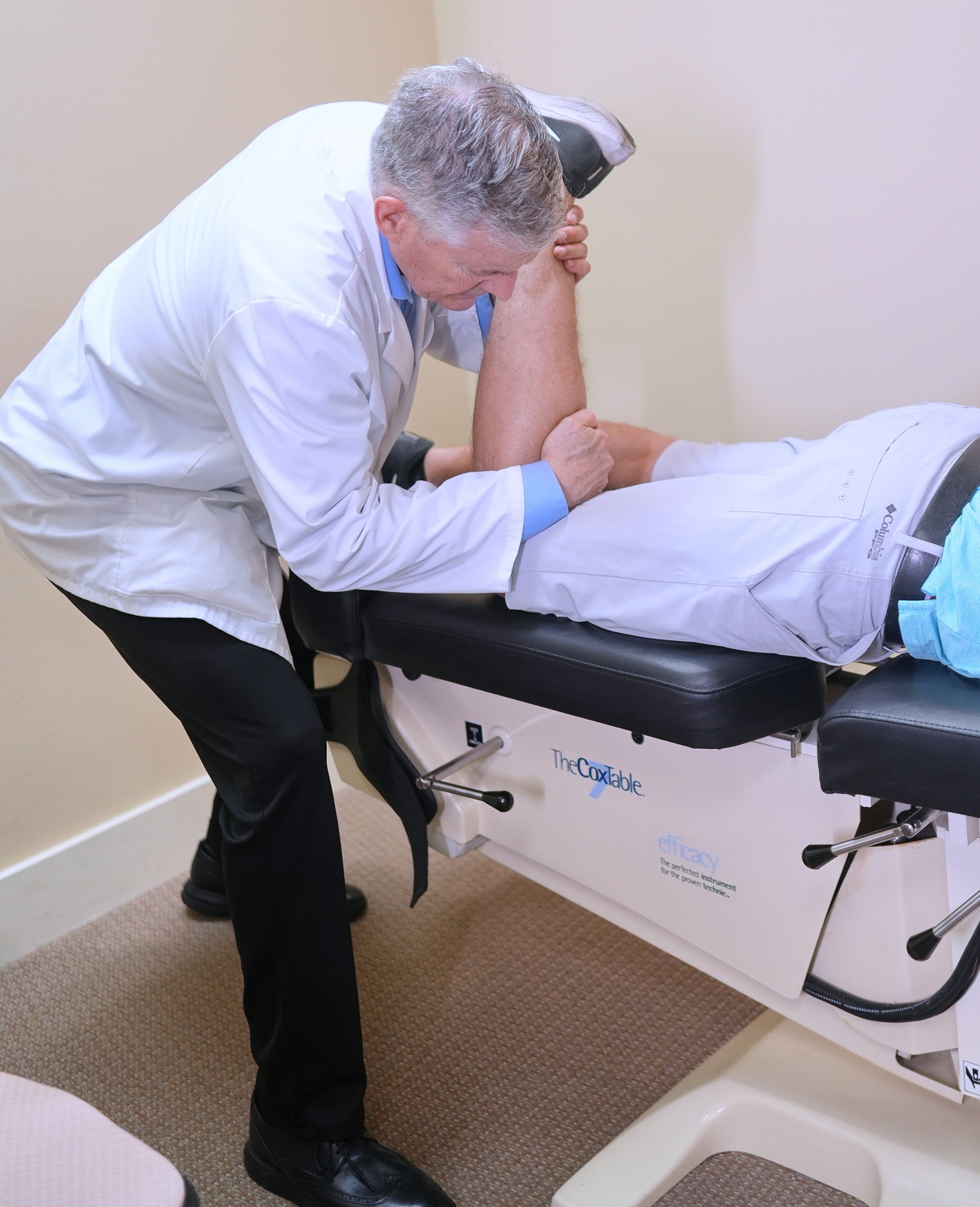
Chiropractic evaluation looks at the whole picture — spinal alignment, hip mobility, pelvic balance, and how your entire kinetic chain is functioning. Dr. Douglass uses gentle, highly refined adjusting techniques developed over more than 30 years of practice to address joint dysfunction not just in the spine but throughout the extremities as well. Many patients who come in frustrated after months of treating their knee directly find that addressing the biomechanical contributors throughout the lower body makes a meaningful difference in how the knee feels and functions.
Chiropractic care is a non-surgical, drug-free approach to musculoskeletal health. At Douglass Chiropractic, care is always personalized — there are no cookie-cutter protocols here. Dr. Douglass takes time to understand your history, your lifestyle, and what your goals are before developing a plan that’s built around you specifically.
Practical Tips for Knee Health
While professional evaluation is always the most important step, there are meaningful things you can do on your own to support your knee health between visits and as part of a long-term wellness routine.
First, pay attention to footwear. Shoes that are worn down, lack adequate support, or are simply the wrong fit for your activity can dramatically affect how forces travel through the knee. This is especially relevant here along the Emerald Coast, where flip-flops and flat sandals are practically a way of life — but not always the most joint-friendly option for long walks or active days.
Second, prioritize movement variety. Staying in any one position for too long — sitting at a desk, standing on a hard floor, or even lying down — can stiffen the knee joint and surrounding tissues. Building simple movement habits throughout the day, like short walks or gentle range-of-motion exercises, can make a genuine difference in how your knee feels.
Third, don’t ignore the hip. Strengthening the hip abductors and glutes supports the knee from above and reduces the demand placed on the knee joint itself. This doesn’t require a gym membership — even basic bodyweight exercises, done consistently, can have a meaningful protective effect over time.
When to See a Chiropractor
If your knee pain has persisted for more than a few days without improvement, it’s worth having it evaluated by a professional rather than waiting to see if it resolves on its own. Pain that disrupts your sleep, limits your ability to walk or climb stairs, or consistently returns after physical activity is your body’s way of signaling that something needs attention.
At Douglass Chiropractic, we frequently see patients who waited weeks or months before seeking care — and who often wish they had come in sooner. Early evaluation typically means more options and a faster return to the activities you love, whether that’s tennis, golf, beach walks, or simply keeping up with your family.
There are also situations where chiropractic care may not be the first or only step, and Dr. Timothy Douglass is committed to being transparent about that. If your knee shows signs of significant structural damage — severe swelling, an inability to bear weight, locking of the joint, or pain following a direct impact — medical imaging and evaluation by an orthopedic specialist may be warranted. Our practice is not in the business of keeping patients in care that isn’t appropriate for their situation. If we believe you need a different type of care or a referral, we will tell you clearly and help you navigate next steps.
Knee Pain at a Glance
|
Condition |
Location of Pain |
Common Trigger |
Key Characteristic |
|---|---|---|---|
|
Patellofemoral Syndrome |
Around or behind kneecap |
Stairs, squatting, prolonged sitting |
Dull ache that worsens with activity |
|
IT Band Syndrome |
Outer side of knee |
Increased activity, running |
Sharp pain during or after movement |
|
Knee Bursitis |
Front or inner side of knee |
Kneeling, repetitive motion |
Localized swelling and warmth |
|
Meniscus Irritation |
Within or along joint line |
Twisting, squatting, aging |
Stiffness and tightness in the joint |
|
Referred Pain (Hip/Back) |
General or diffuse knee area |
Spinal or hip dysfunction |
Knee feels fine on local exam |
|
Osteoarthritis Flare |
Throughout knee joint |
Activity changes, weather |
Morning stiffness, grinding, swelling |
|
Patellar Tendinopathy |
Just below kneecap |
Jumping, overuse, activity spikes |
Sharp with loading, dull at rest |
Myths vs. Facts About Sudden Knee Pain
Myth: If I didn’t injure myself, the pain can’t be serious.
Fact: Many significant knee conditions develop gradually through overuse, poor mechanics, or tissue breakdown — without any single traumatic event. The absence of a specific injury doesn’t mean the problem is minor or that it will resolve without care. Conditions like patellar tendinopathy, meniscal degeneration, and bursitis can all appear suddenly even though the underlying issue has been developing quietly for some time.
Myth: Rest is always the best treatment for knee pain.
Fact: While some rest is appropriate immediately following a flare-up, prolonged inactivity can actually make many knee conditions worse. The muscles and connective tissues that support the knee need movement to stay healthy. Research in musculoskeletal care consistently supports a graded return to movement as part of the recovery process, rather than extended bed rest or complete avoidance of activity.
Myth: Knee pain means I’ll eventually need surgery.
Fact: The vast majority of knee pain cases respond well to conservative, non-surgical approaches. Evidence from organizations like NICE and the American College of Physicians supports conservative care — including manual therapy, therapeutic exercise, and lifestyle modifications — as a first-line approach for musculoskeletal knee conditions. Surgery is typically reserved for specific structural injuries or cases where conservative care has not produced adequate improvement.
Myth: Chiropractors only treat the back and neck.
Fact: Chiropractors are trained in the assessment and management of the entire musculoskeletal system, including the extremities. At Douglass Chiropractic in Destin, Dr. Timothy Douglass regularly evaluates and works with patients experiencing knee, hip, shoulder, and ankle conditions — often in conjunction with the spinal and pelvic factors that contribute to those issues.
Myth: Knee pain is just a normal part of getting older — nothing can be done.
Fact: While some degree of joint change is a normal part of aging, pain and reduced function are not inevitable or untreatable. Many patients in their 40s, 50s, and beyond see significant improvements in knee comfort and mobility through appropriate conservative care. Age alone is not a reason to accept chronic pain as your new normal.
Final Thoughts
Sudden knee pain is rarely a mystery that has to stay unsolved. In most cases, there is a clear biomechanical, structural, or inflammatory explanation — and once that explanation is identified, a thoughtful plan for addressing it becomes possible. That’s what we believe in here at Douglass Chiropractic, and it’s the approach that has earned the trust of families across Destin and the Emerald Coast for more than 15 years.
Dr. Timothy Douglass takes the time to genuinely listen, to assess the whole picture, and to explain what he finds in plain, honest terms. If you’ve been living with knee pain that came on suddenly or has been quietly building for a while, you don’t have to keep guessing — or keep hoping it will resolve on its own. Our team is here to help you understand what’s going on and to work with you toward real, lasting improvement.
If you’re ready to take the next step, we’d be glad to see you here in Destin. Request an appointment with Douglass Chiropractic and let’s figure out what your knee has been trying to tell you.
Frequently Asked Questions
Can a chiropractor help with knee pain?
Yes, in many cases chiropractic care can be a valuable part of addressing knee pain — particularly when biomechanical factors in the spine, hip, or pelvis are contributing. Dr. Timothy Douglass at Douglass Chiropractic evaluates the entire kinetic chain to identify contributing factors that may be overlooked in a knee-only examination. Care is always tailored to the individual patient’s needs.
Why does my knee hurt when I haven’t done anything to injure it?
Many knee conditions develop gradually through cumulative stress, postural imbalances, muscle dysfunction, or tissue breakdown that occurs over time. The pain may feel sudden, but it typically reflects a problem that was quietly building before crossing a threshold. A thorough evaluation can help identify the underlying cause.
Is sudden knee pain a sign of something serious?
Not always, but it’s worth having evaluated rather than ignored. Most cases of sudden knee pain have a musculoskeletal explanation that responds well to conservative care. However, knee pain accompanied by significant swelling, inability to bear weight, locking, or a history of direct impact warrants prompt medical evaluation to rule out more serious structural injury.
What’s the difference between knee pain from the knee itself versus referred pain?
Referred knee pain originates from a nerve or structure elsewhere — typically the lumbar spine or hip — and is felt in the knee even though the knee joint itself is not the source. This type of pain is often diffuse, difficult to pinpoint, and does not change significantly with direct pressure on the knee. A comprehensive chiropractic evaluation can help distinguish between the two.
How long should I wait before seeing someone about knee pain?
If your knee pain has not improved after several days of rest, or if it is significantly affecting your daily function, it’s a good idea to seek an evaluation rather than waiting further. Early assessment generally leads to a broader range of conservative options and a faster return to normal activity.
Does weather actually affect knee pain?
Many people notice that their knee pain worsens with changes in temperature, humidity, or barometric pressure — particularly those with osteoarthritis. While the exact mechanisms are still being studied, this is a widely reported experience and is considered a recognized pattern in musculoskeletal conditions involving the joints. It is not imagined, and it is worth factoring into your overall care plan.
TL;DR
-
Sudden knee pain often has a gradual underlying cause — including conditions like runner’s knee, IT band syndrome, bursitis, meniscus irritation, or osteoarthritis flares — even when it feels like it came out of nowhere.
-
The source of knee pain isn’t always in the knee itself; dysfunction in the lower back, hip, or pelvis can refer pain directly to the knee joint.
-
Chiropractic care offers a non-surgical, personalized approach to knee pain by evaluating and addressing the entire kinetic chain, not just the site of symptoms.
-
Rest alone is rarely the full answer — guided movement, proper biomechanics, and professional evaluation tend to produce better outcomes than waiting it out.
-
If your knee pain has persisted for more than a few days or is limiting your daily life, an evaluation at Douglass Chiropractic in Destin is a meaningful next step toward understanding and addressing what’s going on.


