
Leg pain can be frustrating, confusing, and downright exhausting — especially when it lingers for weeks and nothing seems to help. You stretch, you rest, you try a heating pad, and still the ache, burning, or numbness keeps coming back. If that sounds familiar, you are not alone. Here in Destin, many patients walk through our doors at Douglass Chiropractic having already tried everything they can think of — only to discover that the real source of their discomfort has nothing to do with their leg at all. Understanding where leg pain actually comes from is the first step toward finally getting relief.
What Is Referred Leg Pain?
Referred leg pain is discomfort that originates in the spine or nerves of the lower back but is felt somewhere down the leg. The brain can misinterpret where a pain signal is coming from, especially when the nerve being irritated runs a long path from the spine all the way down to the foot. This means the actual problem — a compressed nerve, a misaligned vertebra, or an inflamed spinal joint — may be sitting in your lower back while your calf or thigh feels like the troublemaker.
Common Spinal Causes of Leg Pain
The spine is the highway through which nearly all nerve communication between the brain and body travels. When something goes wrong along that highway — even in a small way — the effects can show up far from the original problem site. There are several well-established spinal and neurological sources of leg pain that Dr. Timothy Douglass evaluates regularly at Douglass Chiropractic.
Sciatica
Sciatica is probably the most widely recognized cause of nerve-related leg pain. The sciatic nerve is the longest and widest nerve in the human body, running from the lower spine, through the buttocks, and all the way down each leg to the foot. When this nerve becomes compressed or irritated — often due to a herniated disc, bone spur, or spinal misalignment — the result can be a sharp, shooting pain, tingling, or numbness that travels down one leg. Many people assume they pulled a muscle in their hip or thigh, when in reality the sciatic nerve is the culprit.
Herniated or Bulging Discs
The discs between your vertebrae act as cushions, absorbing shock and allowing the spine to move freely. When a disc bulges or herniates, the soft inner material can press on a nearby nerve root. Depending on which disc is involved, this pressure can send pain signals shooting into the hip, thigh, knee, or even the foot. This is one of the most common explanations for leg pain that appears to have no local cause and that worsens when sitting for long periods — something many of our patients in Destin notice after long drives or hours at a desk.
Lumbar Spinal Stenosis
Spinal stenosis occurs when the spaces within the spine narrow, putting pressure on the nerves that travel through it. In the lumbar region, this narrowing often causes leg pain, heaviness, or cramping that gets worse with standing or walking and is temporarily relieved by sitting or leaning forward. It is more common as we age but is not simply something you have to accept as a normal part of getting older.
Sacroiliac Joint Dysfunction
The sacroiliac (SI) joint connects the base of the spine to the pelvis. When this joint becomes inflamed or moves improperly, it can create pain that radiates into the lower back, buttocks, and down the back of one or both legs. SI joint dysfunction is frequently confused with sciatica because the discomfort follows a similar pattern. Proper evaluation is the only way to distinguish between the two.
Facet Joint Irritation
Each vertebra in your spine connects to the ones above and below it through small joints called facet joints. These joints guide movement and provide stability. When they become inflamed or restricted — often due to poor posture, repetitive motion, or an old injury — they can refer pain downward into the buttocks and legs. This type of referred pain is less commonly recognized by patients but is something Dr. Timothy Douglass assesses as part of a thorough spinal evaluation.
Symptoms That Point Away from a Muscle Problem
Muscle-related leg pain usually comes with a clear story: you pushed too hard at the gym, you overdid it on the beach, or you strained something during a weekend project. Nerve-related leg pain tells a very different story. Knowing the difference can save you weeks of chasing the wrong solution.
Nerve or spine-related leg pain tends to have some distinctive characteristics. The discomfort often follows a specific path — traveling down one side of the leg in a consistent line rather than aching diffusely through a muscle. It may feel like burning, electric shooting sensations, or a deep pins-and-needles feeling. Numbness or weakness in the leg or foot is another strong indicator that a nerve is involved. Many patients also notice that certain positions — like sitting for a long time or extending the lower back — consistently worsen the pain, while other positions temporarily relieve it.
If your leg pain has lasted more than a few weeks, keeps coming back despite rest, or is paired with any lower back stiffness or discomfort, there is a good chance the spine deserves a closer look. At Douglass Chiropractic in Destin, Dr. Timothy Douglass takes the time to work through your full history and physical presentation to identify what is actually driving your symptoms.
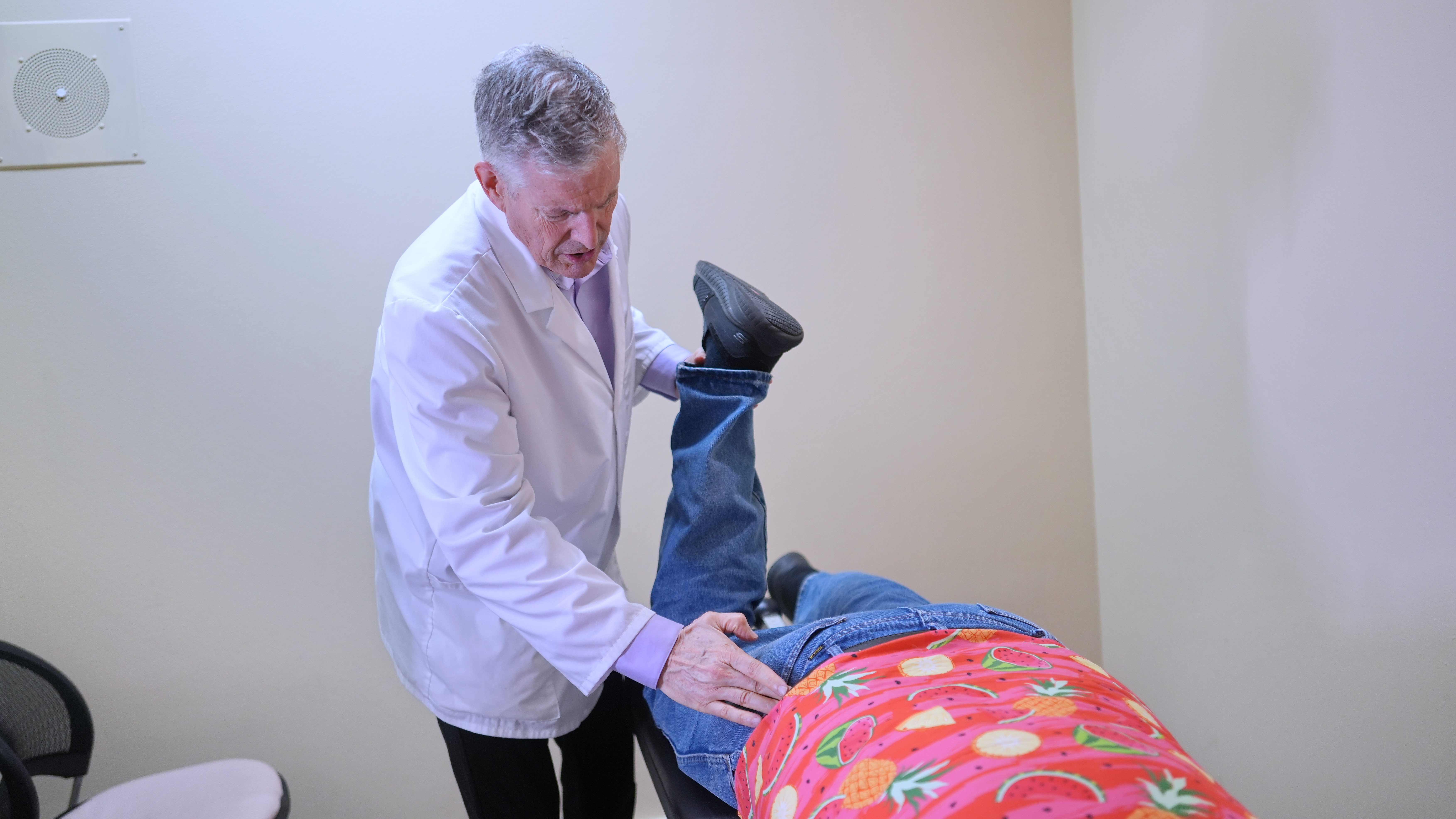
How Chiropractic Care Fits In
Chiropractic care is one of the most well-supported conservative, non-surgical approaches for addressing spine-related leg pain. Organizations like the American College of Physicians (ACP) and the National Institutes of Health (NIH) have recognized spinal manipulation as a viable first-line option for managing certain types of low back pain and associated leg symptoms. It is non-invasive, does not rely on medication, and focuses on identifying and correcting the underlying mechanical issues rather than simply masking discomfort.
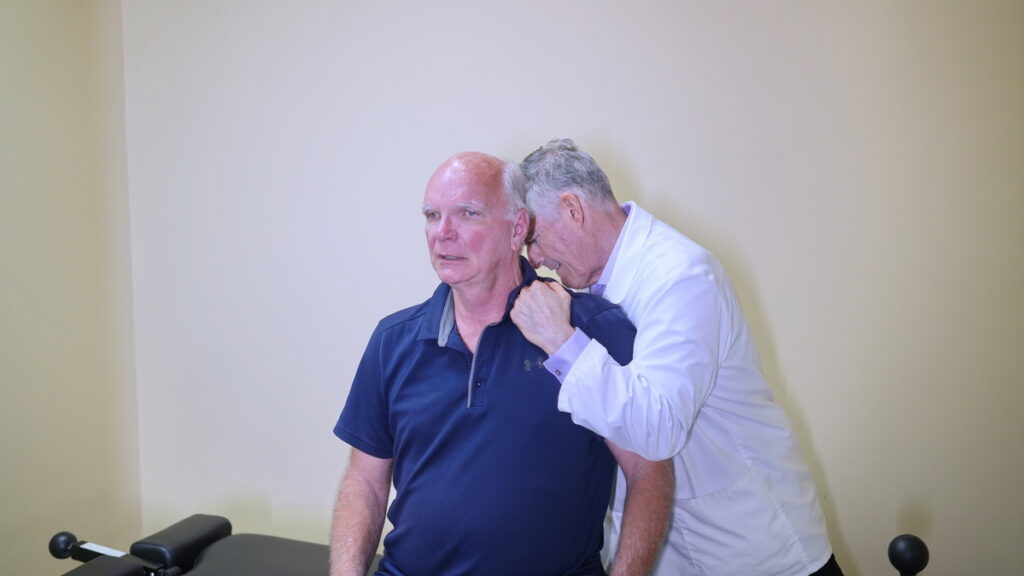
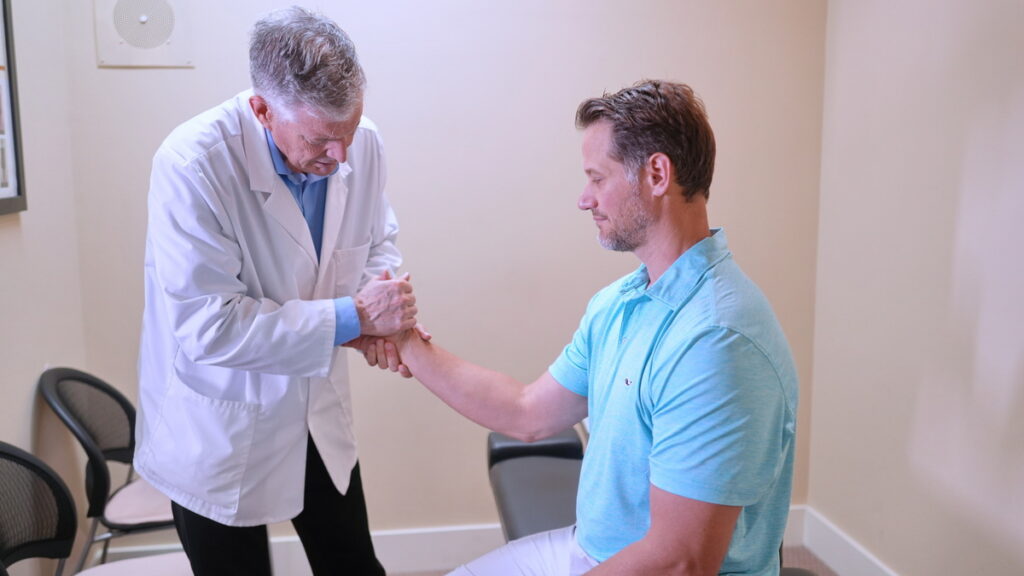
When you visit Douglass Chiropractic, Dr. Timothy Douglass does not use a one-size-fits-all approach. Every patient receives a thorough evaluation that includes a detailed health history, postural and movement assessment, and orthopedic and neurological testing as needed. From that foundation, he builds an individualized care plan designed around your specific anatomy, lifestyle, and goals.
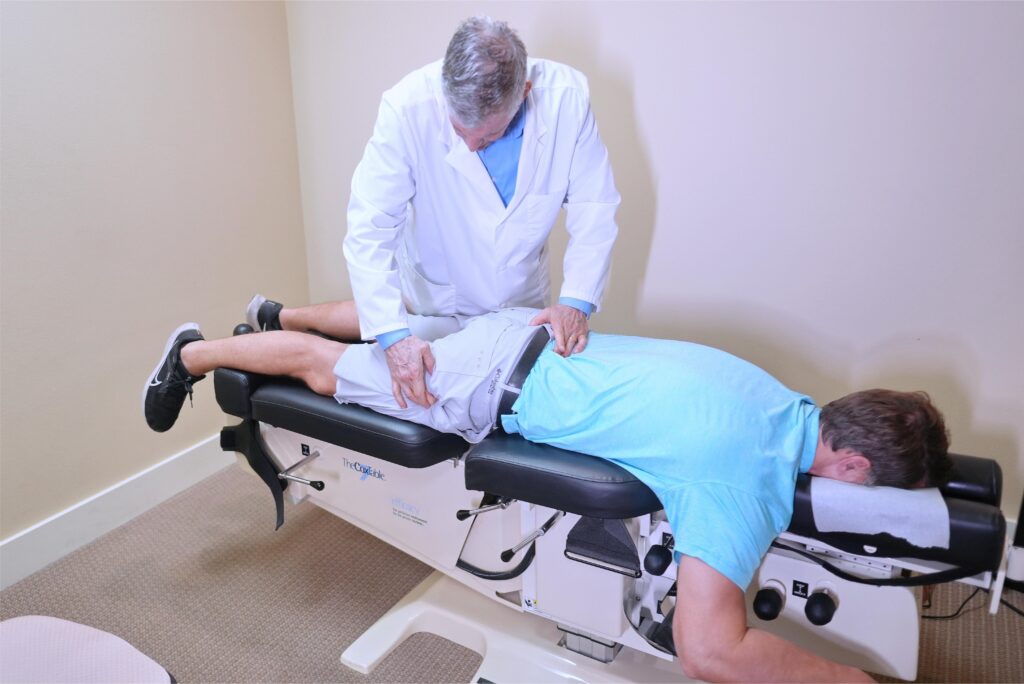
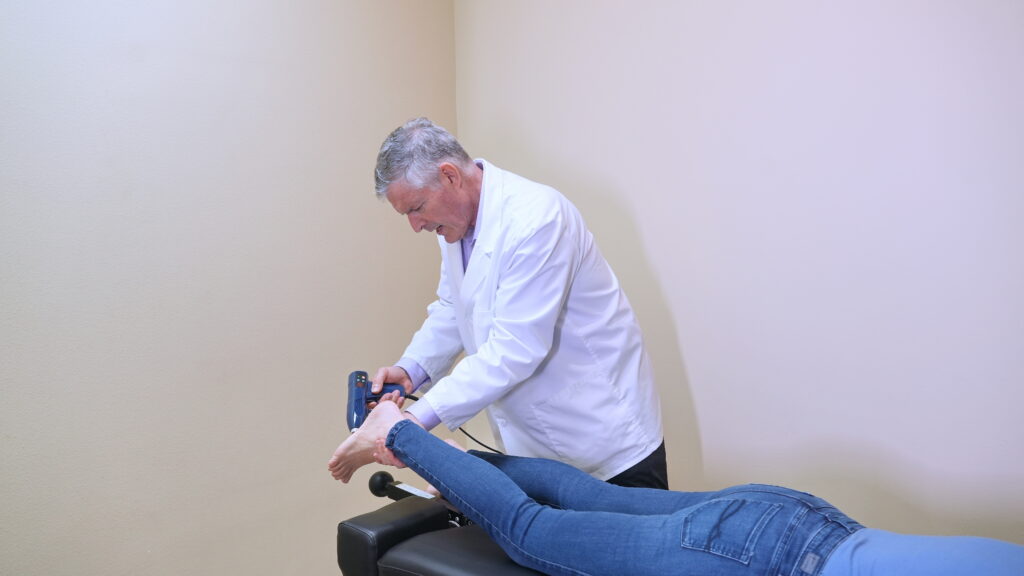
Dr. Douglass has spent over 30 years developing and refining his own adjusting techniques — approaches that patients consistently describe as unlike anything they have experienced elsewhere. These methods are precise, gentle, and adapted to each person’s needs, making them appropriate for a wide range of patients including those who have been hesitant about chiropractic care in the past. The goal is not just to reduce your leg pain in the short term, but to restore proper spinal alignment and nerve function so the problem does not keep returning.
In addition to spinal adjustments, care at Douglass Chiropractic may incorporate soft tissue work, rehabilitative guidance, and ergonomic recommendations based on your day-to-day activities. Chiropractic care works best as part of a broader wellness approach, and Dr. Timothy Douglass is committed to helping each patient understand their condition and actively participate in their own recovery.
Practical Tips to Support Your Recovery
While professional evaluation and care are essential for nerve-related leg pain, there are supportive habits you can build into your daily routine that may help reduce your discomfort and protect your spine over time.
Pay close attention to how long you are sitting each day. Prolonged sitting increases pressure on the lumbar discs and can aggravate nerve irritation significantly. If your job keeps you at a desk, try standing or walking briefly every 30 to 45 minutes. This simple shift can make a meaningful difference in how your lower back and legs feel by the end of the day.
Sleeping position also matters more than most people realize. Sleeping on your side with a pillow between your knees helps keep the pelvis and spine in a more neutral alignment, which reduces stress on the lower back and the nerves that pass through it. Stomach sleeping, by contrast, forces the lumbar spine into an extended position that can worsen nerve irritation over time.
Core strength is another key piece of the puzzle. A strong, stable core supports the lumbar spine and takes pressure off the discs and nerve roots. You do not need to do anything intense — gentle, controlled movements that activate the deep stabilizing muscles of the abdomen and lower back are often the most effective. Dr. Timothy Douglass can guide you toward the right exercises for your specific situation rather than generic routines that may not be appropriate for your condition.
Finally, stay mindful of your footwear, especially if you spend time walking on Destin’s beautiful beaches or hard resort surfaces. Unsupportive shoes can alter your gait and shift stress up into the pelvis and spine in ways that gradually contribute to lower back and leg problems.
When to See a Chiropractor
If your leg pain has been present for more than two to three weeks, is recurring despite rest and self-care, or is paired with any stiffness, aching, or discomfort in your lower back, it is a good time to schedule an evaluation. Chiropractic care is especially well-suited for patients whose leg pain is positional, travels in a predictable path, or comes alongside numbness, tingling, or weakness.
There are, however, red flags that indicate you should seek immediate medical attention rather than a chiropractic visit. If you experience sudden loss of bladder or bowel control, progressive weakness in both legs, or severe numbness in the groin or inner thighs, please go to an emergency room right away. These symptoms can indicate a serious spinal emergency called cauda equina syndrome and require urgent care. Dr. Timothy Douglass and the team at Douglass Chiropractic will always refer patients appropriately when a situation falls outside the scope of chiropractic care — your safety and wellbeing always come first.
Muscle Problem vs. Nerve-Related Leg Pain: A Comparison
|
Feature |
Muscle-Related Leg Pain |
Nerve-Related (Spinal) Leg Pain |
|---|---|---|
Pain pattern |
Diffuse ache, localized to muscle belly |
Follows a specific path down the leg |
Sensation type |
Soreness, tightness, tenderness |
Burning, electric, shooting, or pins-and-needles |
Onset |
Usually tied to physical activity or injury |
May appear gradually with no clear triggering event |
Numbness or tingling |
Uncommon |
Common, especially in foot or calf |
Back involvement |
Usually absent |
Often present, even if mild |
Worsens with |
Pressure on the muscle, movement of the specific muscle |
Sitting, bending forward, certain spinal positions |
Improves with |
Rest, ice/heat, gentle stretching |
Position changes, spinal decompression, chiropractic care |
Best evaluated by |
Physical assessment of the muscle |
Full spinal and neurological evaluation |
Myths vs. Facts About Leg Pain
Myth: If my back doesn’t hurt, my leg pain can’t be coming from my spine.
Fact: This is one of the most common misconceptions we encounter at Douglass Chiropractic. It is entirely possible for a spinal nerve to be irritated or compressed without producing obvious back pain. The discomfort may only manifest in the leg, which is why many cases of nerve-related leg pain go unrecognized for months.
Myth: Leg pain that’s been there a long time is just something I have to live with.
Fact: Persistent leg pain that hasn’t responded to rest or self-care is a sign that something mechanical or neurological deserves a proper evaluation — not acceptance. Many patients find meaningful improvement through chiropractic care even after struggling with leg pain for a long time. Longevity of a symptom is not a reason to stop looking for answers.
Myth: Sciatica only affects older people.
Fact: While sciatica does become more common with age, it can and does affect younger adults as well. Disc injuries, prolonged sitting, athletic activity, and even pregnancy can all contribute to sciatic nerve irritation in people across a wide age range. Here in Destin and across the Emerald Coast, Dr. Timothy Douglass sees patients of all ages presenting with sciatic symptoms.
Myth: Chiropractic adjustments are too forceful to be safe for nerve-related pain.
Fact: Chiropractic care is one of the most thoroughly studied conservative interventions for spinal and nerve-related pain. Modern chiropractic techniques — including the individualized methods Dr. Timothy Douglass has developed over 15 years of practice — are designed to be precise and controlled. Many patients describe his adjustments as surprisingly gentle, even when they expected something uncomfortable.
Myth: I should just wait it out — most leg pain goes away on its own.
Fact: While some minor muscle soreness does resolve on its own, nerve-related leg pain that persists beyond a few weeks rarely improves without addressing the underlying spinal cause. Waiting too long can sometimes allow the underlying issue to progress, making recovery more involved than it would have been with earlier intervention.
Final Thoughts from Douglass Chiropractic
Leg pain that won’t quit is not something you should have to push through alone or simply learn to manage. When it keeps coming back despite stretching, rest, and self-care, your body is trying to tell you something important — and more often than not, the message is coming from your spine.
At Douglass Chiropractic in Destin, Florida, we have been helping families across the Emerald Coast find real answers to persistent pain since 2009. Dr. Timothy Douglass built this practice on a commitment to individualized, thorough care that goes beyond symptom management. He takes the time to understand what is actually driving your discomfort and develops a plan designed around you specifically — not a generic protocol pulled from a textbook.
If you have been living with leg pain and aren’t sure where to turn, we would genuinely love to help. Our community trusts us not because of flashy marketing, but because our results speak for themselves — one neighbor, one family, one patient at a time. You deserve to understand what’s happening in your body and to have a care team that takes that seriously. We’ve got your back — and your legs.
Frequently Asked Questions
Can a chiropractor help with sciatica?
Yes, chiropractic care is widely recognized as a conservative, non-surgical option for addressing sciatica. Evidence suggests that spinal manipulation may help reduce nerve irritation and improve function for many patients with sciatic symptoms. At Douglass Chiropractic, Dr. Timothy Douglass evaluates each case individually before recommending a course of care.
How do I know if my leg pain is nerve-related or a muscle injury?
Nerve-related leg pain typically follows a specific path down the leg and may include burning, tingling, numbness, or weakness. Muscle pain tends to be localized and tied to activity or direct injury. A thorough evaluation by a qualified chiropractor is the most reliable way to distinguish between the two.
Is it safe to get a chiropractic adjustment if I have a herniated disc?
In many cases, yes — chiropractic care can be appropriate and beneficial for herniated disc-related leg pain. However, the approach must be tailored carefully to the individual. Dr. Timothy Douglass performs a full evaluation before any treatment to ensure the selected techniques are safe and appropriate for your specific situation.
How long does it take for nerve-related leg pain to improve with chiropractic care?
Recovery timelines vary depending on the underlying cause, the severity of nerve irritation, and how long the problem has been present. Some patients notice improvement within a few visits, while others require a longer course of care. Dr. Timothy Douglass will discuss realistic expectations with you as part of your initial evaluation at Douglass Chiropractic.
Should I get imaging (X-ray or MRI) before seeing a chiropractor for leg pain?
Imaging is not always required before a chiropractic evaluation. Dr. Timothy Douglass can often gather significant clinical information through a thorough physical and neurological assessment. If imaging is indicated, he will recommend it and coordinate appropriately with other providers.
Can leg pain caused by spinal issues come back after chiropractic treatment?
Recurrence is possible, particularly if underlying lifestyle factors — such as prolonged sitting, poor posture, or lack of core stability — are not also addressed. That is why care at Douglass Chiropractic includes guidance on supportive habits and movement strategies designed to help protect your results over the long term.
TL;DR Summary
-
Persistent leg pain that follows a specific path, involves burning or tingling, or pairs with any back discomfort is often neurological or spinal in origin — not just a muscle problem.
-
Common spinal causes include sciatica, herniated discs, lumbar spinal stenosis, SI joint dysfunction, and facet joint irritation.
-
Chiropractic care is a well-supported, non-invasive option for addressing the spinal root causes of leg pain rather than just managing symptoms.
-
Dr. Timothy Douglass at Douglass Chiropractic in Destin, FL provides individualized evaluations and personalized care plans using techniques refined over more than 15 years of practice.
-
If your leg pain has lasted more than a few weeks or keeps returning despite self-care, a chiropractic evaluation is a smart, safe next step.